The action: Everyone needs an organizational system to track goals, priorities, and tasks (quote Matt Mochary).
The long-form: Everyone’s system will differ, so if you already have a system, you should stick with it! But if you don’t yet have a way to organise your tasks, here are three methods that have helped me:
1. Get it all out of your head with GTD
A core tenet of David Allen’ Getting Things Done (GTD) is The mind is for having ideas, not holding them.
The first step is to empty your head. Write down every single thing you know you have to do, no matter how big or small. The effect is liberating and stress-reducing!
The book describes the rest of the method, such as making your to-dos actionable and conducting a weekly review of all your commitments. The key is to make your to-do-list attractive and dependable.
2. Time block with the pomodoro method

The power of just getting started is enormous. When I don’t know how to get going on a memo or some other task I have been putting off, I get out my egg-timer and set it to 25 minutes.
If it’s writing I have avoided, I try to write like a madman, without looking at the screen until the bell goes off. Usually this is enough to overcome the initial resistance to getting started.
This is called the pomodoro method (named after Francisco Cirillo’s tomato shaped kitchen timer) and is also great for structuring study sessions, ensuring you get breaks, and will also make you better at estimating how long a task will take.
3. Plan your week (and perhaps also your day) like Cal Newport
The weekly perspective is close enough to be highly relevant, but distant enough to provide context and perspective. […]
Stephen Covey – The 7 Habits of Highly Effective People
If you were to ask me what single practice would do more to balance your life and increase your productivity than any other, it would be this:
Plan your week, each week, before the week begins.
Covey notes that we can choose what lense to use on life. We usually have telephoto view—focusing on today’s tasks and events. At other times it is useful to zoom out, and look at our long-term goals and values with a wider angle. But the normal lense, and the best place to combine these two views, is the weekly perspective.
Cal Newport, author of Deep Work and So Good They Can’t Ignore you, is also a proponent of writing a weekly plan.
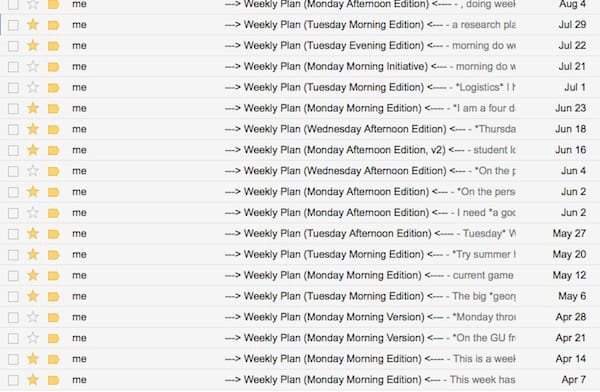
Every weekend, make a rough plan for the days ahead. Send an email to yourself with the plan and the answers to the following questions:
- Where are the time slots I have for doing deep work?
- What are my major commitments? What are the top 1-3 things I need to get done this week?
- Looking ahead, what do I have coming up in (at least) the next three weeks? Anything I need to plan for now?
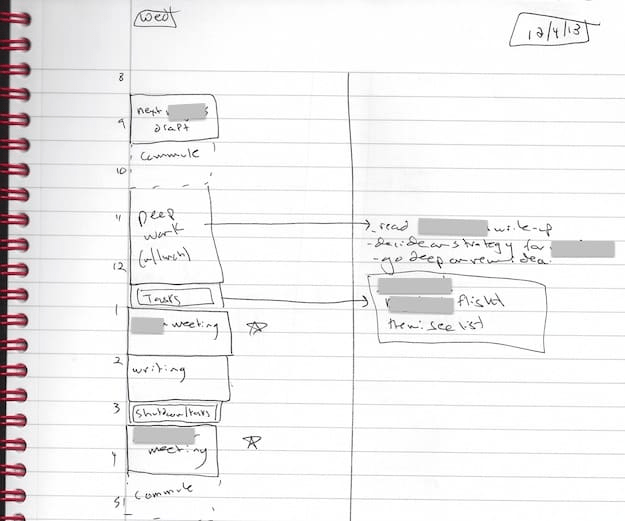
Newport also suggests making a more detailed hour-by-hour schedule for the day ahead. I’ve found this to be useful on days with fewer meetings, such as (meeting-free) Mondays.
See also:
 First Forty