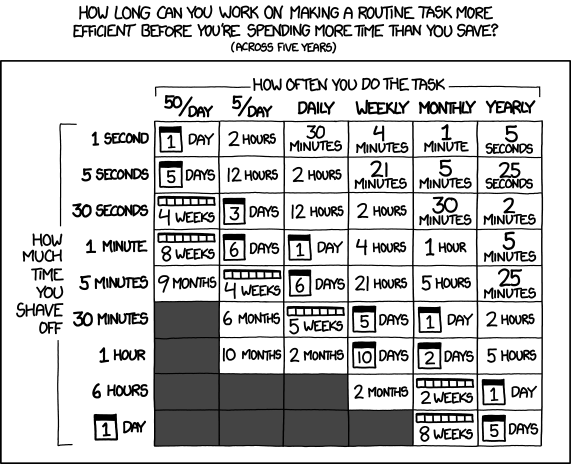
The action: Invest more in the tools your team use the most.
The long-form: I had a colleague who confined himself to about three formulas in Excel. As I was watching him work slowly, it suddenly dawned on me that nothing was actually preventing me or my younger colleagues from becoming like him. I was using Excel in exactly the same way as I learned 15 years ago. I had hardly learned any new features in any of the other programs I used every day. And my “touch-typing” was restricted to four fingers in total.
In the everyday whirlwind, there’s rarely any incentive to learn new ways of working. And for office workers, efficiency is often seen as an individual responsibility, not something leadership could or should aid with. But how much wouldn’t there be to gain if the company, for example, hired the top expert to run a masterclass in the tools you use the most?
Is there an add-on to PowerPoint that would shave a few seconds off a daily activity? Is there a script someone could write to automate a weekly report? Is there a better tool for the job you can learn? Can you set aside time to sharpen the saw?
Perhaps there is enough potential for internal improvement that you could even hire someone whose zone of genius involves building tools for other people?
Whether by reducing complexity (f40) or investing in tools, the return on investment for improving people’s work conditions could be enormous.
 First Forty